



The Responsive Body – somatic hacking and artistic friendships
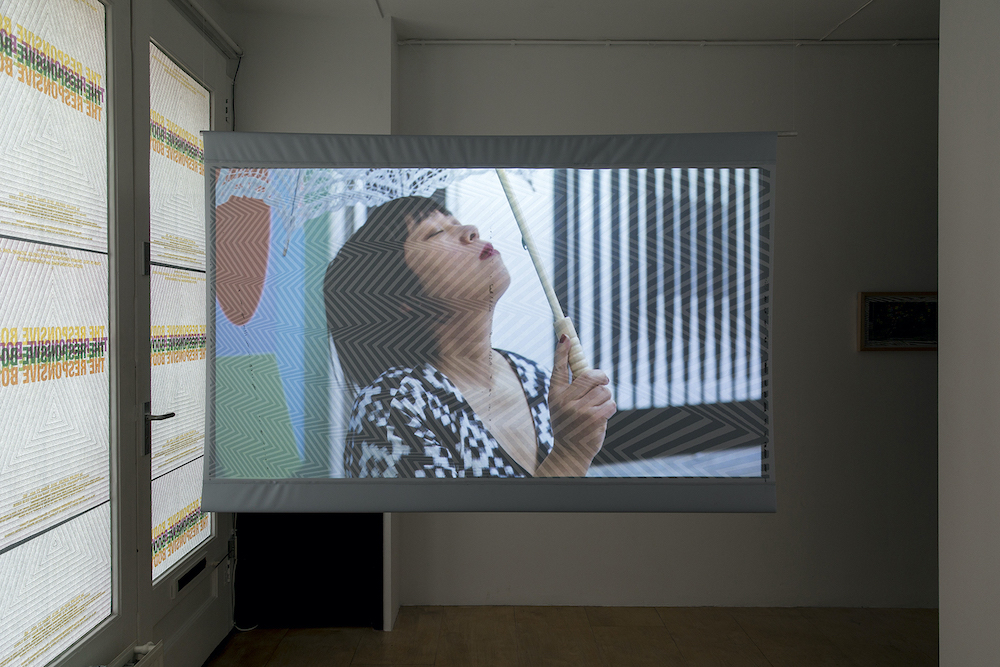
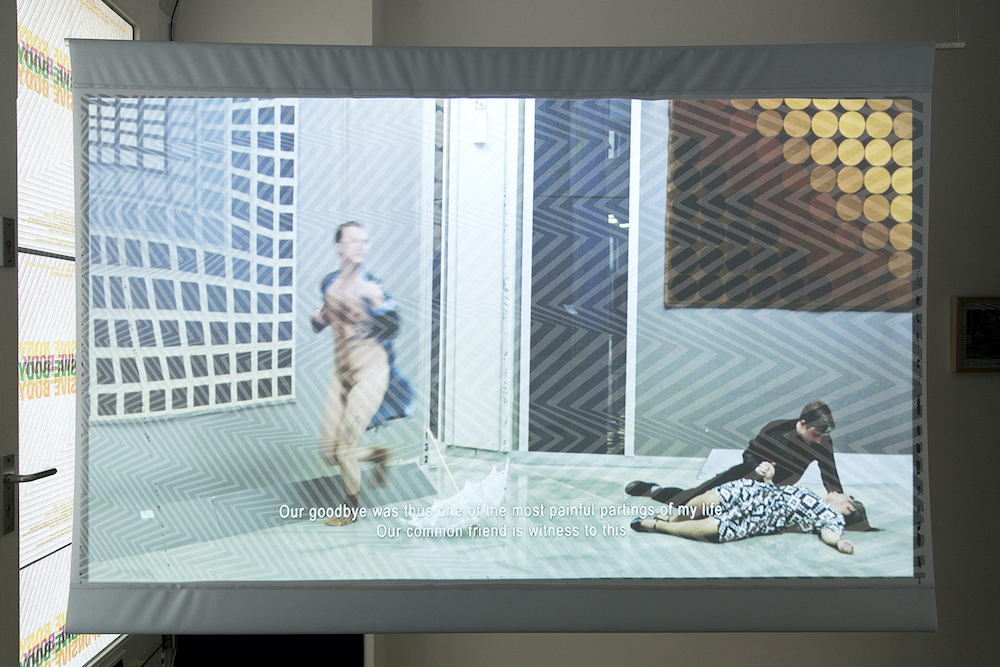
Grey walls, the numbers 1, 2, 3 vertically written at the bottom of the door frame. On the frontal wall, we see a series of illuminated paintings: perfect circles of gold, silver, black and brown standing very close to each other. A white parasol is abandoned with its handle upwards on the floor. One character is lying down, wearing dark red lipstick, a geometrical black and white dress and a pair of green earrings. The other character is leaning onwards, wearing a black transparent blouse and speaking about the sense of beauty in art. Suddenly the camera moves and another person, wearing a silky blue robe, runs through the room. The person wearing the transparent black blouse recites a text about beauty, bodies and the senses. It ends with how an essay can be a token of friendship. “May this essay be a testimonial of our friendship, a friendship which, in me, remains pure of all malice”.
This is a telling scene from the video installation 'The Responsive Body' directed by the artist Philipp Gufler. It is not a surprise that those words are pronounced by the character which is played by the artist/director. The sense of artistic friendship and the relation of artists to art is a common thread throughout the work of Philipp Gufler. In previous works, Gufler brings forward stories from queer communities and subjects who do not fully partake in the heteronormative discipline of bodies. This is the case with the beautiful series of quilts that he makes as a token of physical, bio- graphical and tactile affinities with artists, activists, and writers that are no longer living; a sense of artistic kinship permeates in his performances and writings.
The web of art, friendship, and life is very present in his latest work ‘The Responsive Body’. The film takes place in Aix-en-Provence, a half-mythical place for the lovers of 19th-century art. It is staged in the museum of Fondation Vasarely, initiated by Op artist Victor Vasarely whose work became very popular in the 1960s. An invisible character is also the British Op art painter and writer Bridget Riley whose writing is embodied by Johanna Gonschorek in ‘The Responsive Body’.
All the characters are played by artists with whom Gufler has developed specific relations in the last years: Diogo Da Cruz, Johanna Gonschorek, Richard John Jones, Evelyn Taocheng Wang, Louwrien Wijers. Coming from different geographies and generations they all play an extension of their selves. In their practices, most of them work with performativity, the changing borders between the self and art, and the role of the artist as a catalyst of social change.
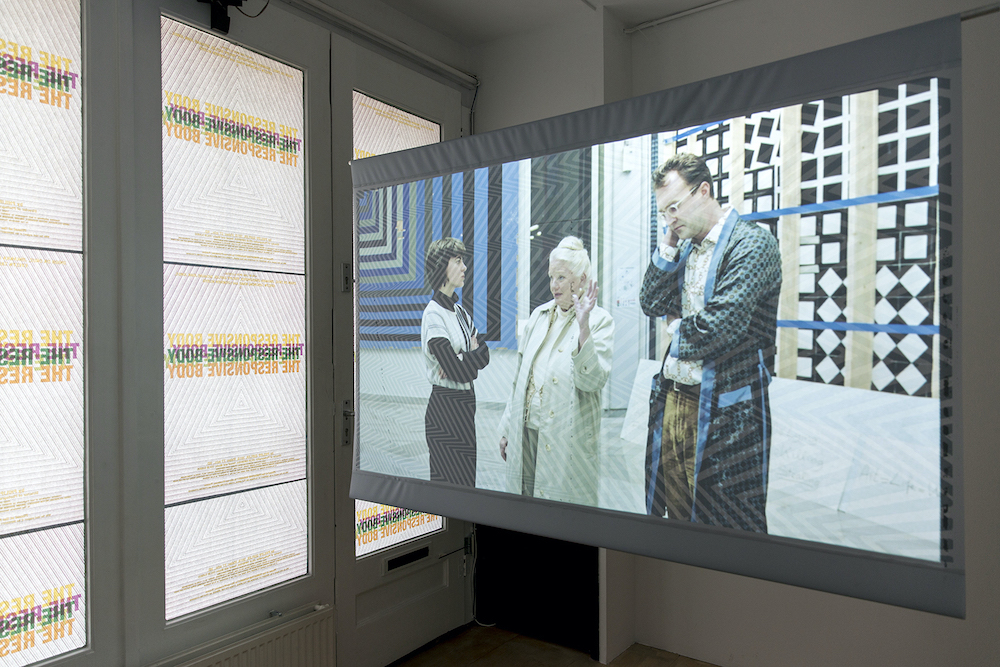
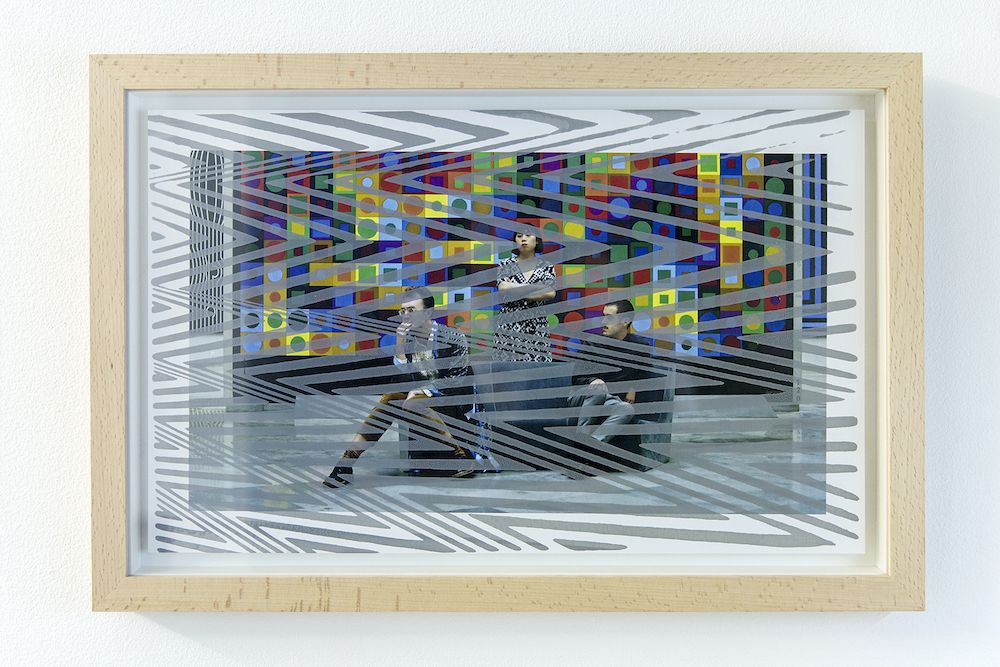
Their characters dwell on the fictions of what it means to be an artist and to the question of where the I -as in a unified subject- ends, and the art arises. “We live in language,” the character of Louwrien Wijers pronounces, and in this film language is very much an embodied experience. Art and life are anachronistically linked, coming in and out of character, in and out of focus. The paintings and the spoken words in the film induce concrete reactions to the somatic processes of the characters. Vasarely, who built the museum, believed in a democratic collective revolution through art. He created the Fondation Vasarely -now in disarray- with monumental Op art works. The large pieces with geometrical colorful patterns create a direct reaction to the bodies of the characters. The color patterns induce physical reactions to the bodies of the film-viewers as well. Vasarely's work and fantasies become like a breather. The architecture becomes an anthropomorphic apparatus, a digestive system of conceptual and art historical bowels. The journey of the artists to this site and subsequent feeling is also a ritual, almost an act of exorcism. According to Philipp Gufler, the presence of the artists’ characters in the museum attempts at criticizing the male genius, and the male-dominated stories of modernist art. At the same time, the film is also a fictional story for the ‘end’ of the museum, its demolition announced by the character of Diogo da Cruz at the end of the film.
I have to think of what Paul B. Preciado calls Campceptualism, a self-hacking of camp visuals and cerebral shocks. The Op art induces a heavy somatic undulation: colors, a feeling of sickness, confusion of the senses. Bright colors mix with philosophical thoughts, and with different relations of artistic friendships. All the characters endure a collective experience and are far from a homogeneous body. Through this visceral movement, they reject a binary presentation of art and artists. Rather in this collective moment, their different individualities are even more accentuated: the silk ropes, the dark red lipstick, the dramatic glance, the conviction that art and poetry can change the world. The individual characters of the artists seem to come even more to life through this group experience.
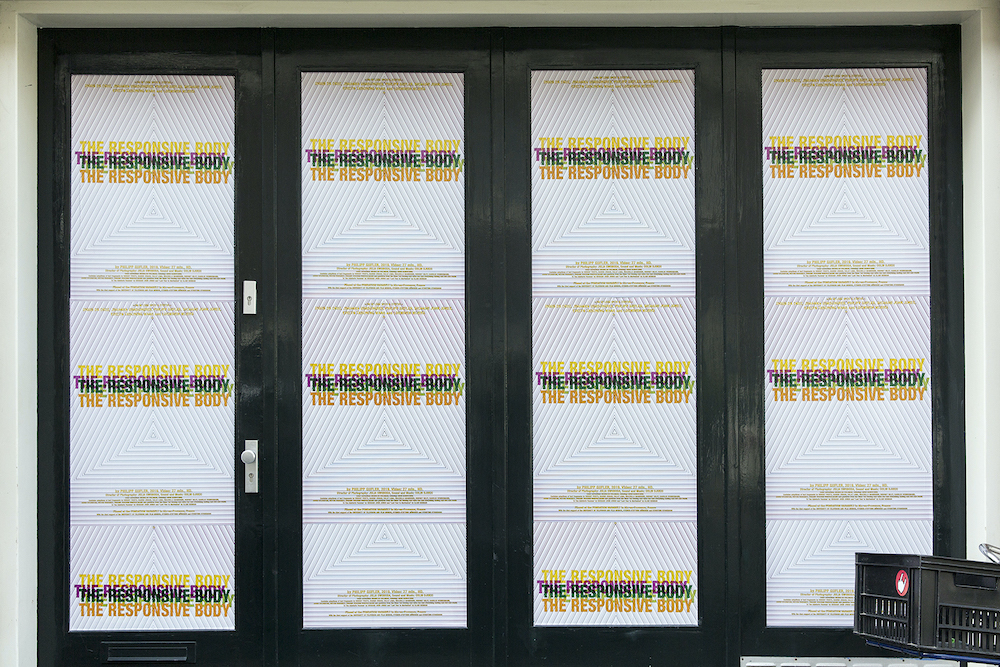
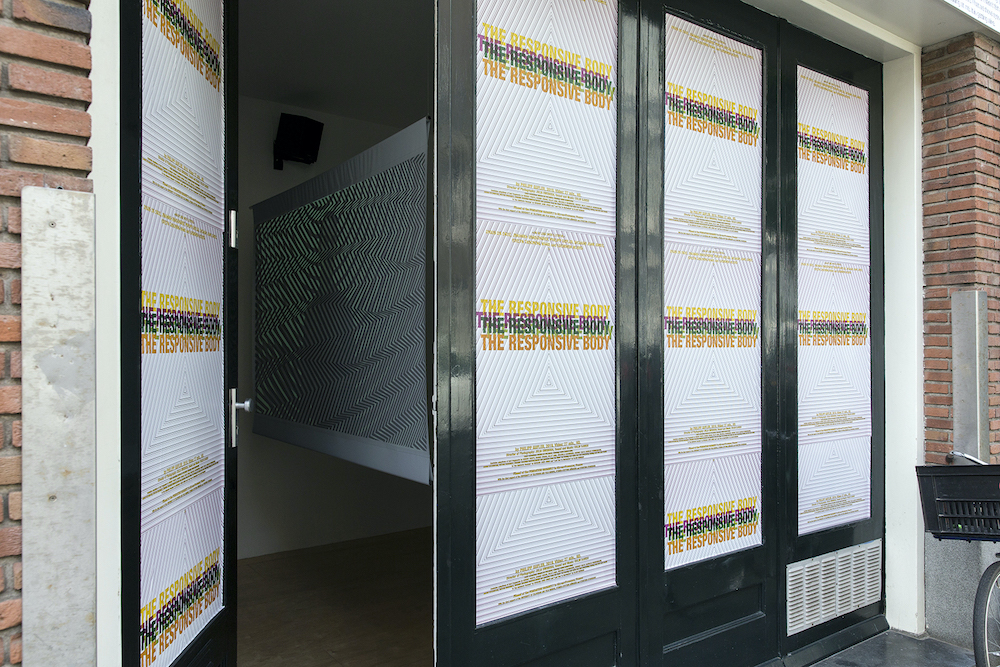
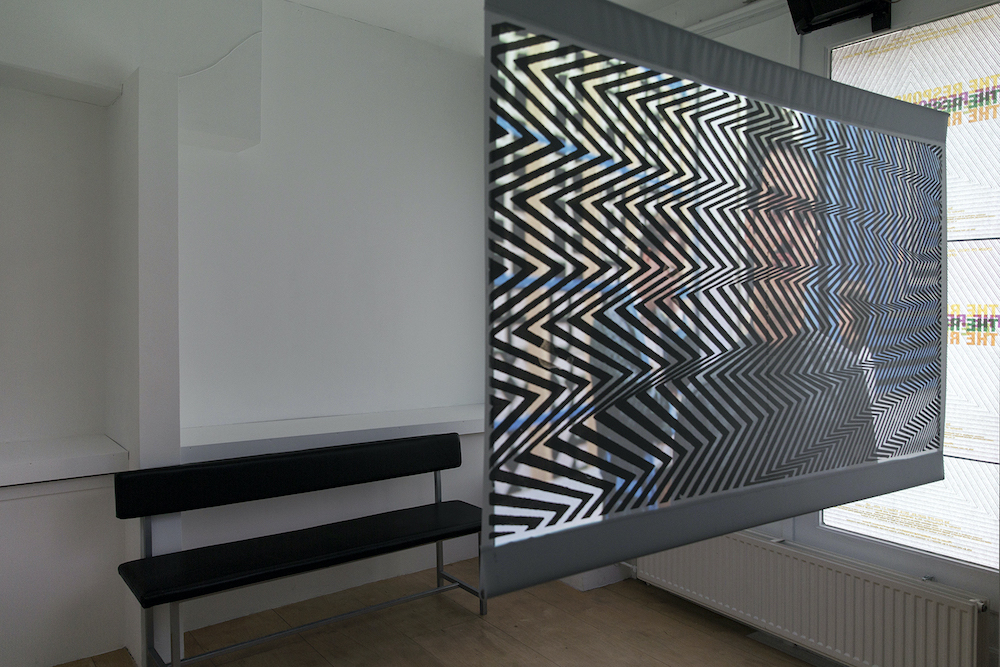
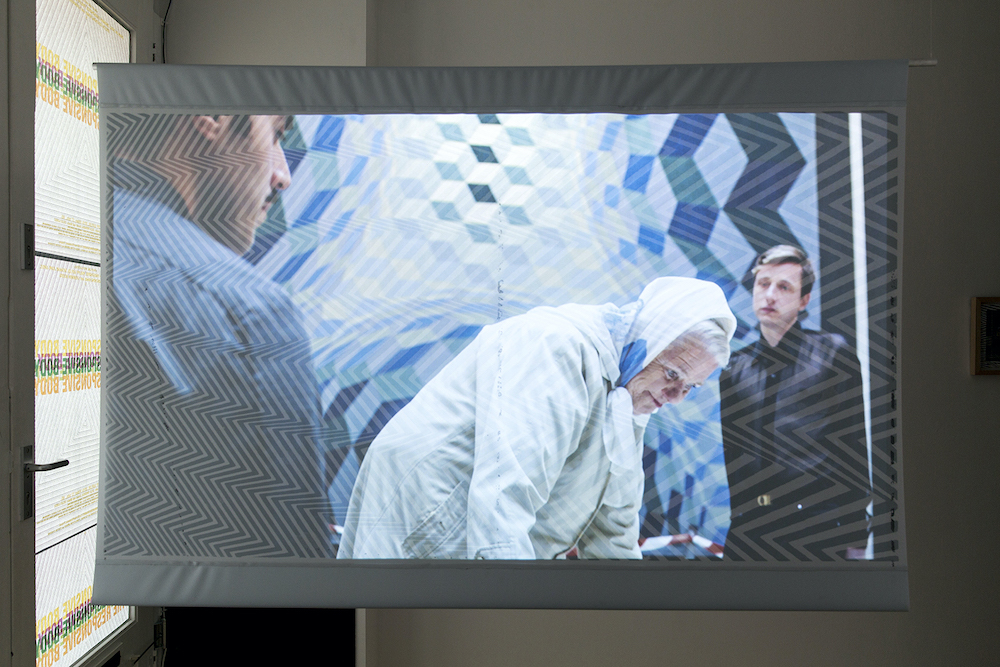
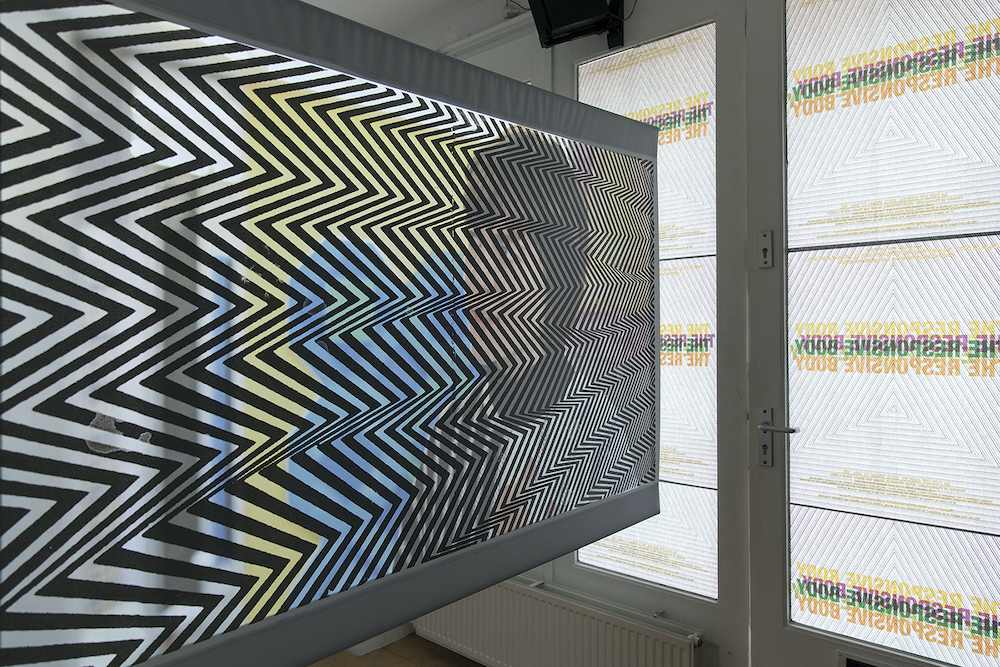
In the exhibition 'Pleasure-Pain' at Marwan, the film is projected onto a foil, which, with its silkscreen pattern, resembles one of Bridget Riley’s paintings. The pattern creates an optical illusion and somatic reactions. This has a physical effect on the bodies of the visitors.
'The Responsive Body' creates a zone where the collective coexists with character formation, where visual qualities speculate on tactile sentiments and where camp becomes conceptual. The tactile connections of art and artists are extended to visitors. Like in a chemical reaction, the somatic correspondences of friendship, love, and art become interchangeable and mutate into new elements.