
I remember clearly the inside of the van as I walked past. Its back doors were sprung open to the street. The road had been carved up, its viscera - the cracked tarmac, old cobbles, sand and soil - piled roughly beside the open wound, a hole barely a metre across. Inside two men were operating. The first was in his late thirties, kneeling in the damp sand, and pushing a fibre optic cable deeply and firmly into the receiving socket. The second man was in his early twenties. He sat on the edge of the hole, one leg down, the other up on the surface, which he used to prop his arm, which he used to prop his head. I wonder what is down there?
They were sweating (it was a hot day). I stopped outside the newsagents to watch them. The younger man brushed the sweat from his forehead and let his arm rest against his knee again. I noticed his bicep twitch and flex, a little ripple that pulled the muscle from his elbow to his bare shoulder. It swelled and he held, then fell. Did I mention he was wearing a vest? It was grey and dirty, smeared with the clay of the earth below, and it barely clung to him, falling straight down where gravity allowed, allowing a breeze and eyes to run up between top and body, brushing him. His trousers were built for work. Made of a thick, man-made canvas, they showed the marks of work. They were battleship grey and adorned, with pockets and zippers. Around the butt they were made of a thicker black material, which looped and framed his buttocks and ran to his thighs, which they circumnavigated. They clung to him, and beneath his body hair brushed against the fabric, reaching for it as it slid past, like seaweed on the ocean floor reaching for the tide. Then the rest: tattoos, muck, skin and salt. I imagine his home life, his evenings at the gym, what his girlfriend’s haircut might look like, and the colour of their sofa cushions.
The road is dug up everyday. So regularly that the rules and regulations for it are universal and strict. A misplaced shovel hitting a gas main could close a neighbourhood for a day. There is a language to digging up the road, too. Spray painted on the floor are small dashes and numbers in red, blue and yellow, denoting power, telephone and internet services, gas and water. These universal standards spread to the various material infrastructures used to denote what is just below the surface: the grates and manhole covers, taps and hydrants, and the drain covers. Yet despite these standards, the truth of the matter works outside the delineations and restrictions of an engineer’s diagrammatic plan. The road is rubble laid on earth, and workers break it open with hammers and drills. It’s just pipes down there, just a hole in the ground with some pipes and tubes, covered in sand and asphalt while we walk above. They’ve made a big hole in the ground, and now the two men pull a big yellow plastic board over it, to stop anyone falling in, drunk in the dark.
In the back of their van is a rig of tools. Some hang from hooks or loops, others clip into the metal grid that is screwed into the van’s side. A place for everything, and everything in its place. I can’t help but desire the two men. They are taking care of things, and that’s attractive. On the street they gather their tools, their machinery, their waste, and load it meticulously back into the van, strapping things down with thick cables and ratchet straps. They know what they are doing. The younger man lifts his vest to rebuckle his belt. I am staring now. His hair runs from the waistband of his boxer shorts to his belly button. To the left of his belly button is a long scar. It is old, poorly healed, visible in white relief against the tan of his skin. I wonder about the surgery, the surgeon, the clean wound and the muscle wall being parted to reach the young man’s guts. I can’t help but imagine his colleague standing over the operating table, refilling the hole with builder’s hardcore and thick clay. I have an acute crisis at this image, brought upon by staring at the younger man’s body, at the realisation of what happens when the inside fails to stay inside, and the outside fails to stay outside.

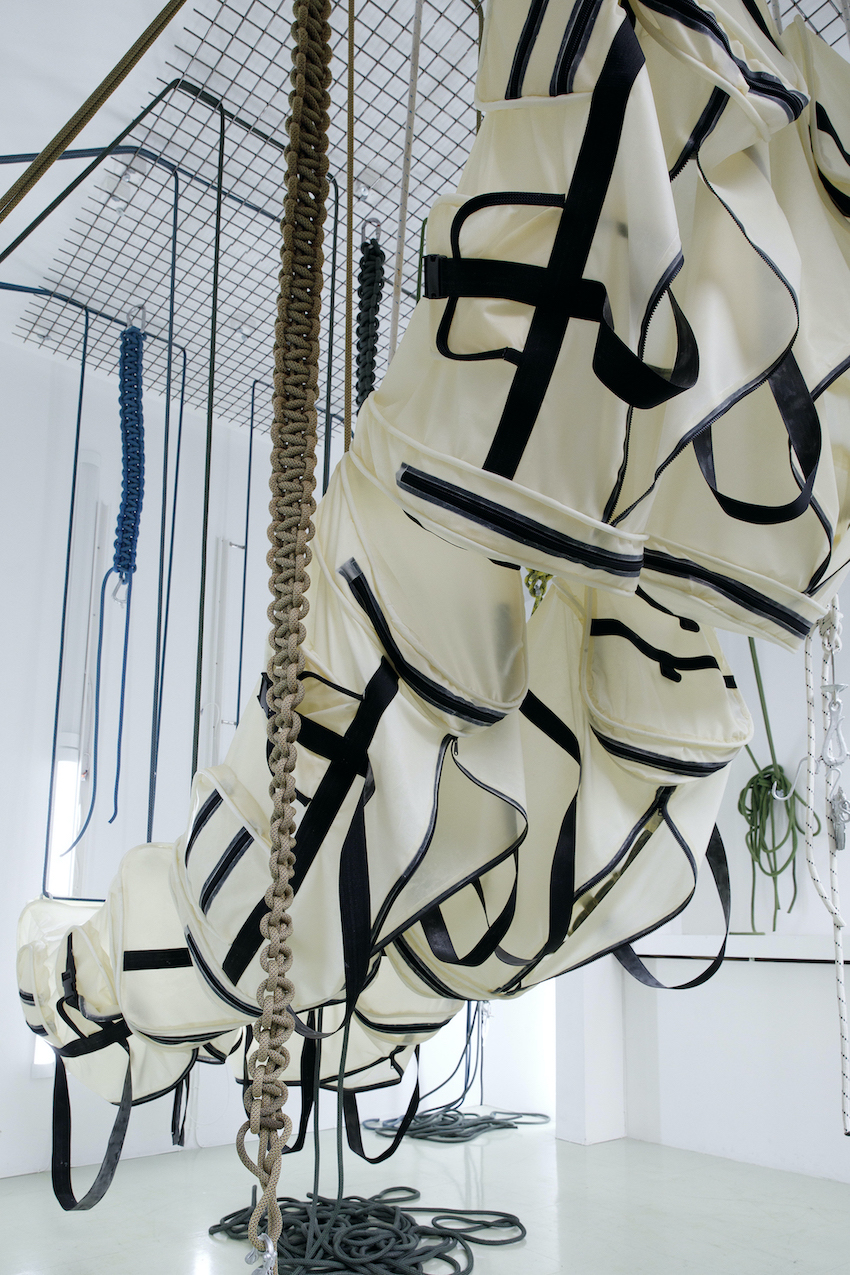
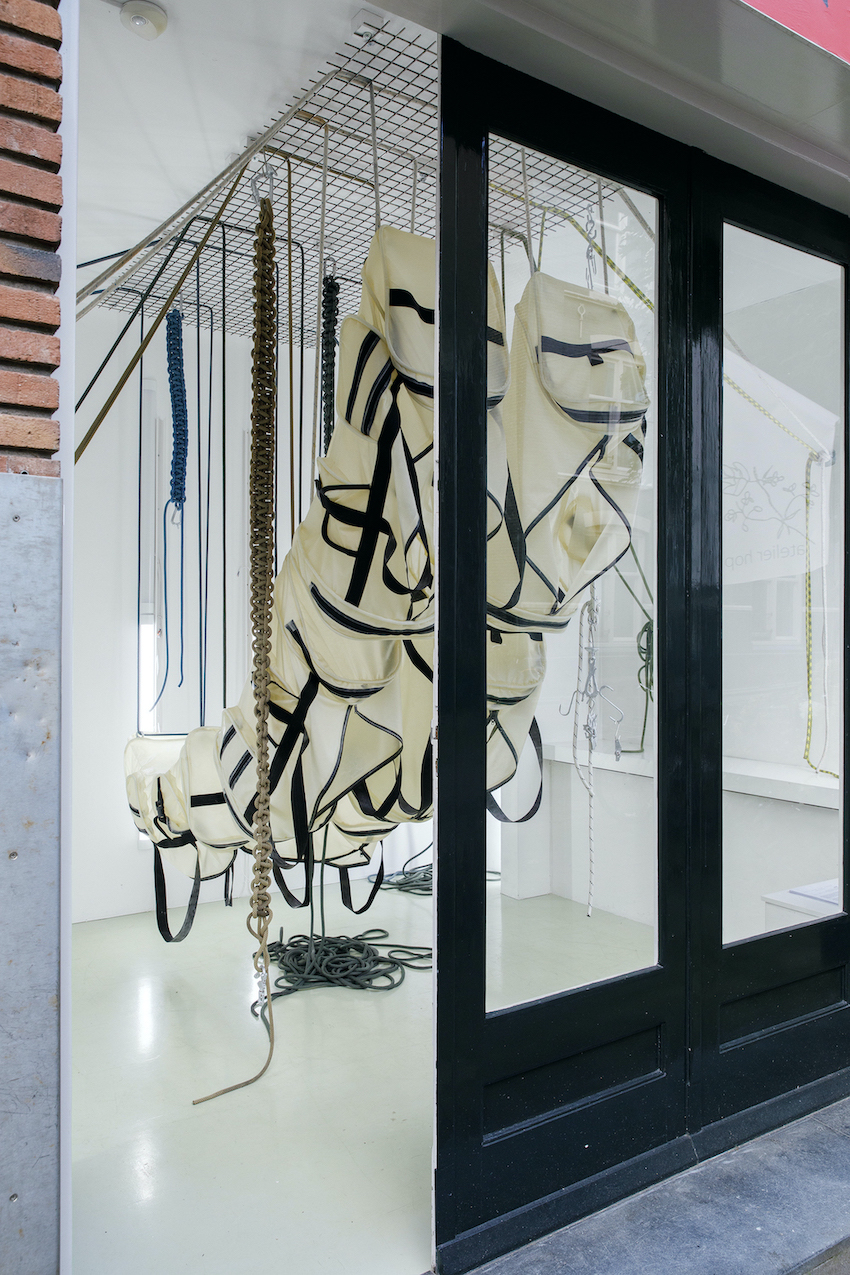
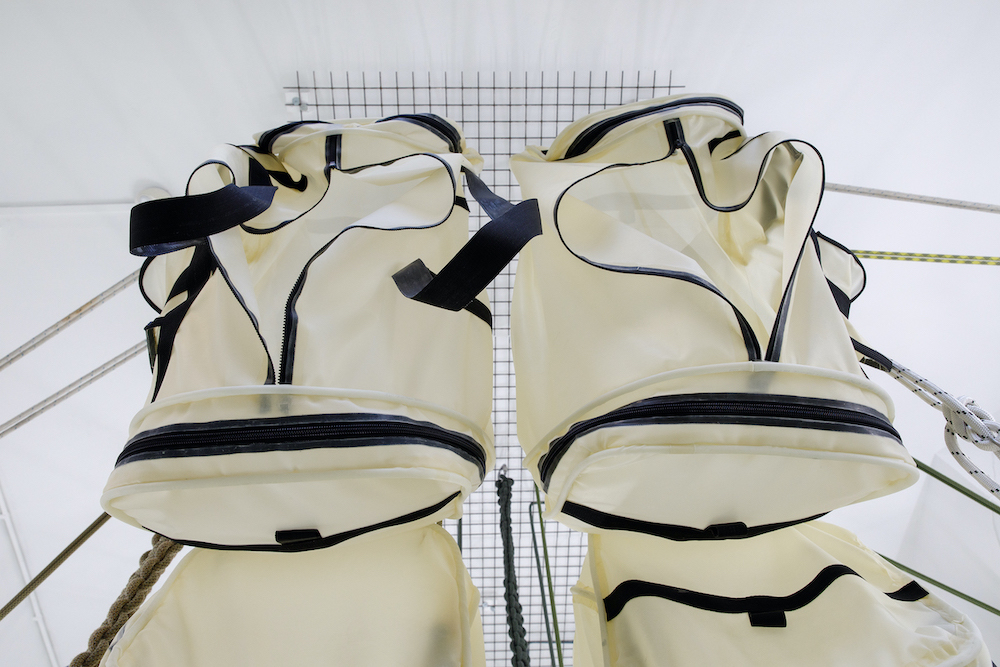
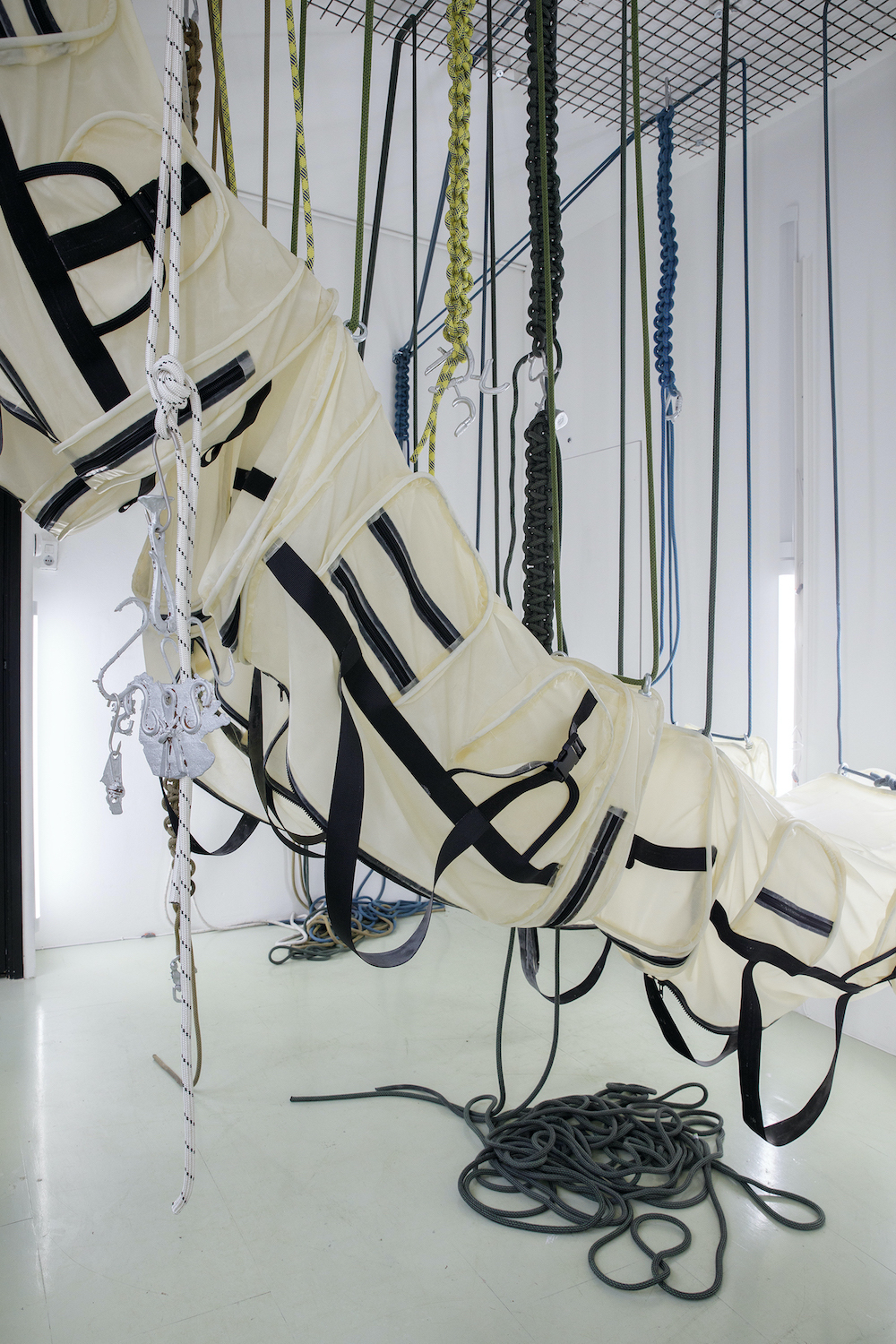
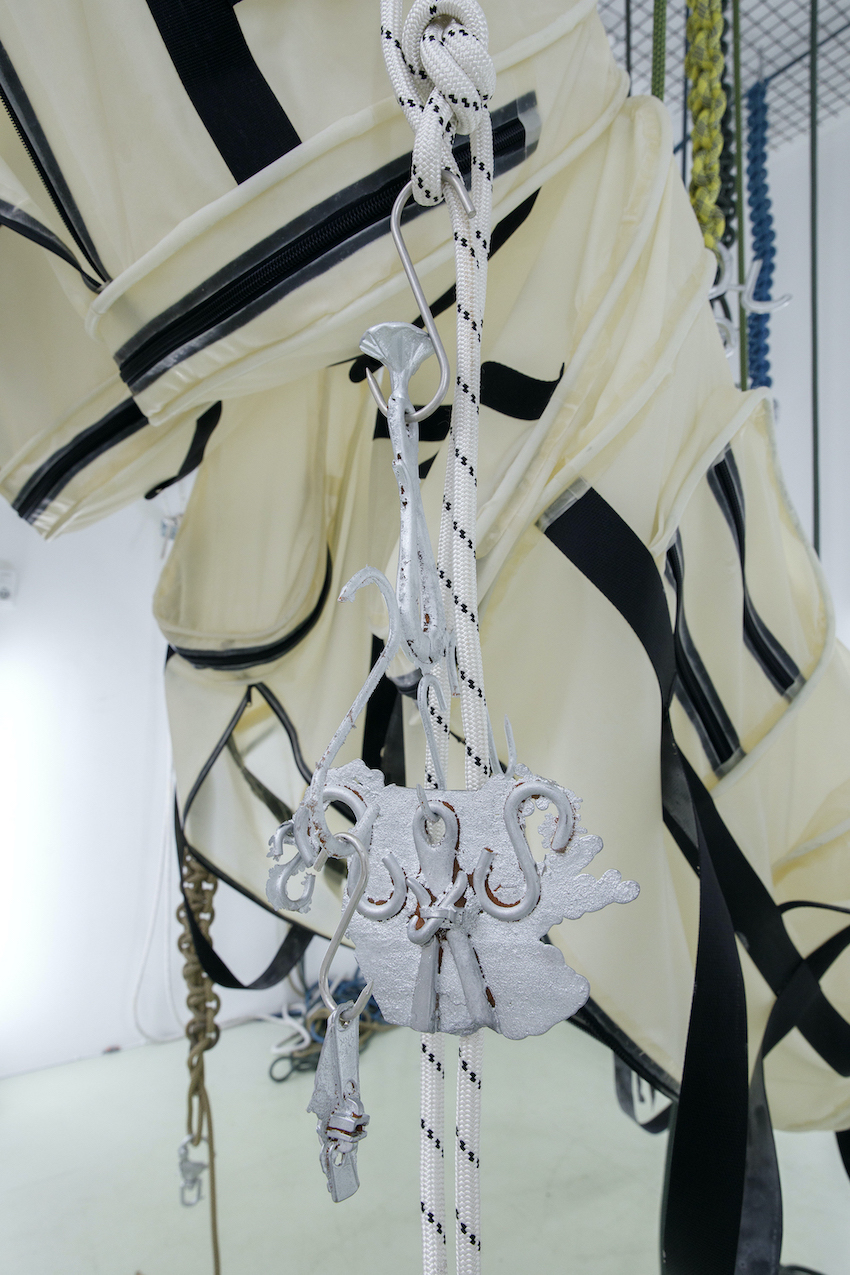
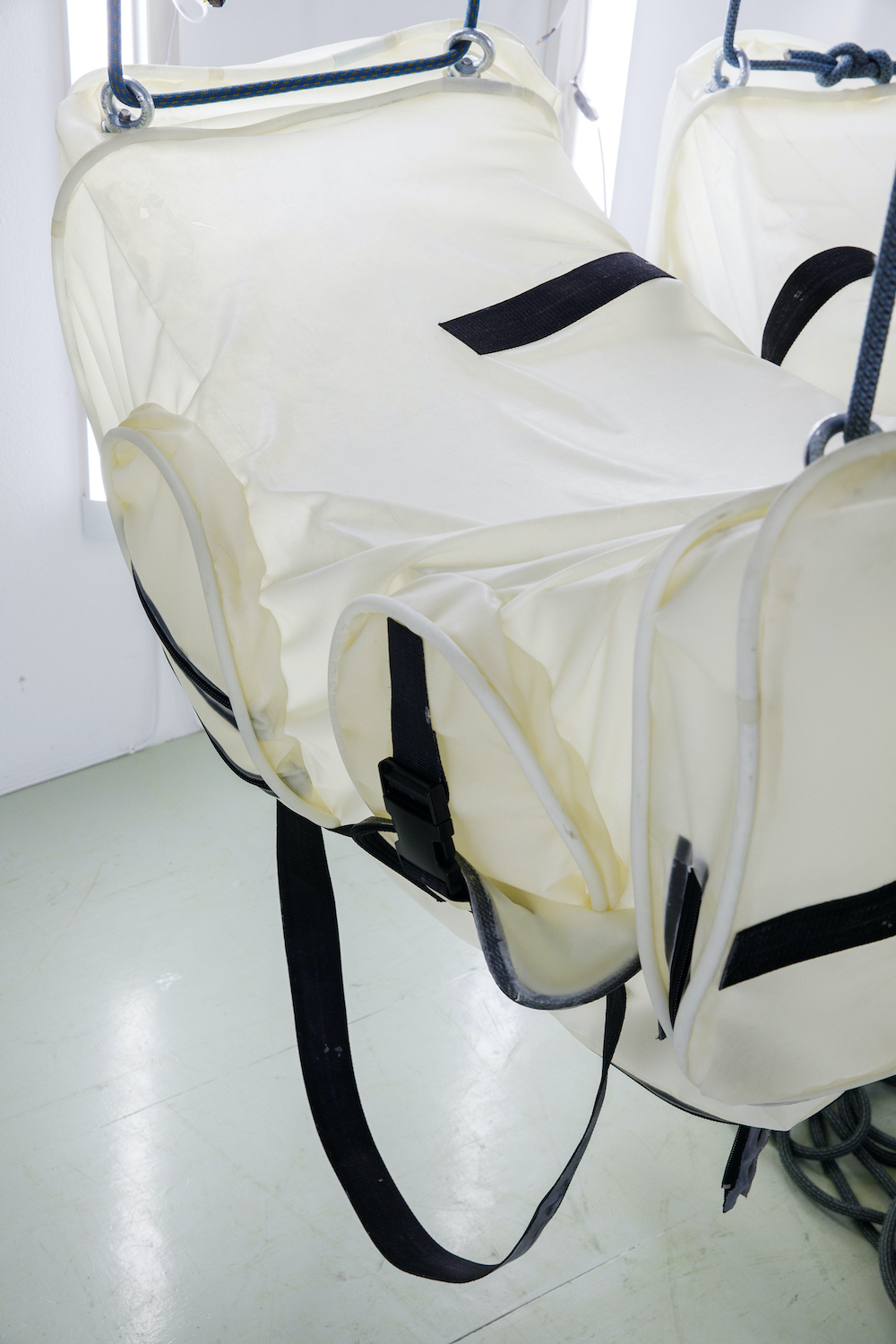

Roid Gut
Nell Schwan
20.09.2023 to 03.12.2023
Curated by Dieuwertje Hehewerth, Tirza Kater and Tim Mathijsen.
We wish to thank AKINCI gallery, Anllel Maria Tanús Guillén, Huw Lemmey, Karin Iturralde Nurnberg, Lou Vives, Mire Lee, Moa Holgersson, Nica Roses, Ruben Janssen, and Xiomara Virdó. Documentation by Franz Mueller Schmidt.
Roid Gut is supported by Amsterdams Fonds voor de Kunst.
Documentation by Franz Mueller Schmidt.
Exhibition Text by Huw Lemmey
Huw Lemmey
Huw Lemmey is a novelist, artist, and critic who lives in Barcelona. Huw writes on culture, sexuality, and cities for the Guardian, Frieze, Flash Art, Tribune, TANK, The Architectural Review, Art Monthly, and ArtReview, amongst others. He is the co-author, with writer Ben Miller, of the book Bad Gays: A Homosexual History (Verso Books, 2022), based on the popular podcast of the same name. He is the author of three novels: Unknown Language (Ignota Books 2020), Red Tory: My Corbyn Chemsex Hell (Montez Press, 2019), and Chubz: The Demonization of my Working Arse (Montez Press, 2016)