
'I have passed on your proposal, or question, concerning the flooding of the project space with slip. We have talked about it, let it sink in, and talked some more. We would like for it to happen, on the condition that it happens safely for you, us and anyone entering the space. We have to think electricity, water damage and lasting stains. Also slip danger, and as discussed, the necessity to access the boiler.'
Drawing its name from the history of the hospitalisation of childbirth—where, when confronted with an exponential increase in the number of deaths during birth and in order to cover up this institutional unpreparedness and negligence, hospitals began burying women in pairs—Two In A Coffin is a two-person exhibition by Valentina Curandi and Isabelle Sully that steams from the artists’ differing approaches to the effects of standardisation on both the gendered body and artistic production. In occupying the confined space of Marwan together, and through scoring a narrative around the administration of life and the management of death, a number of site-specific sound, text and performative works will be presented that concentrate on issues of safety, expression and policy as they relate to the protection of property.

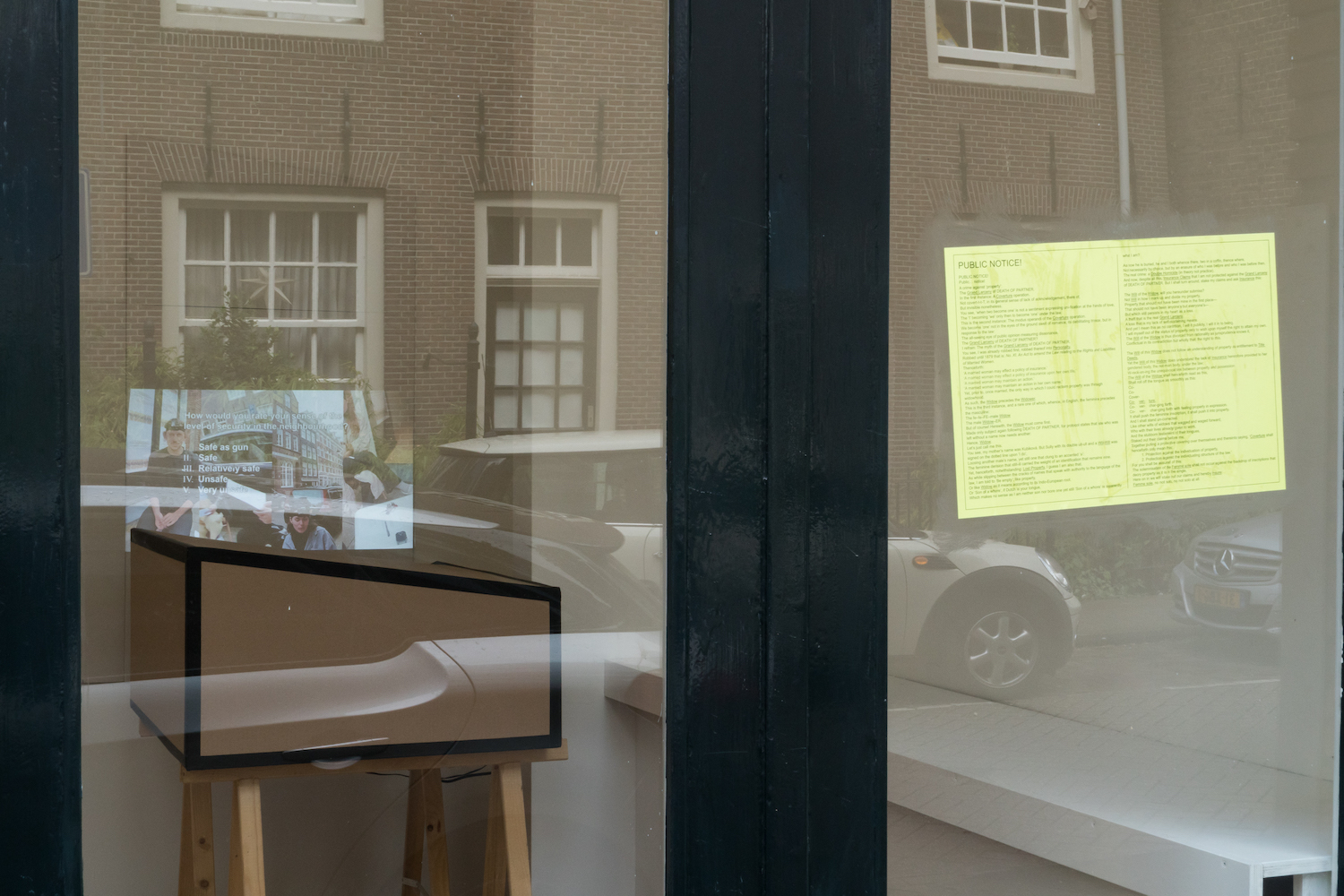
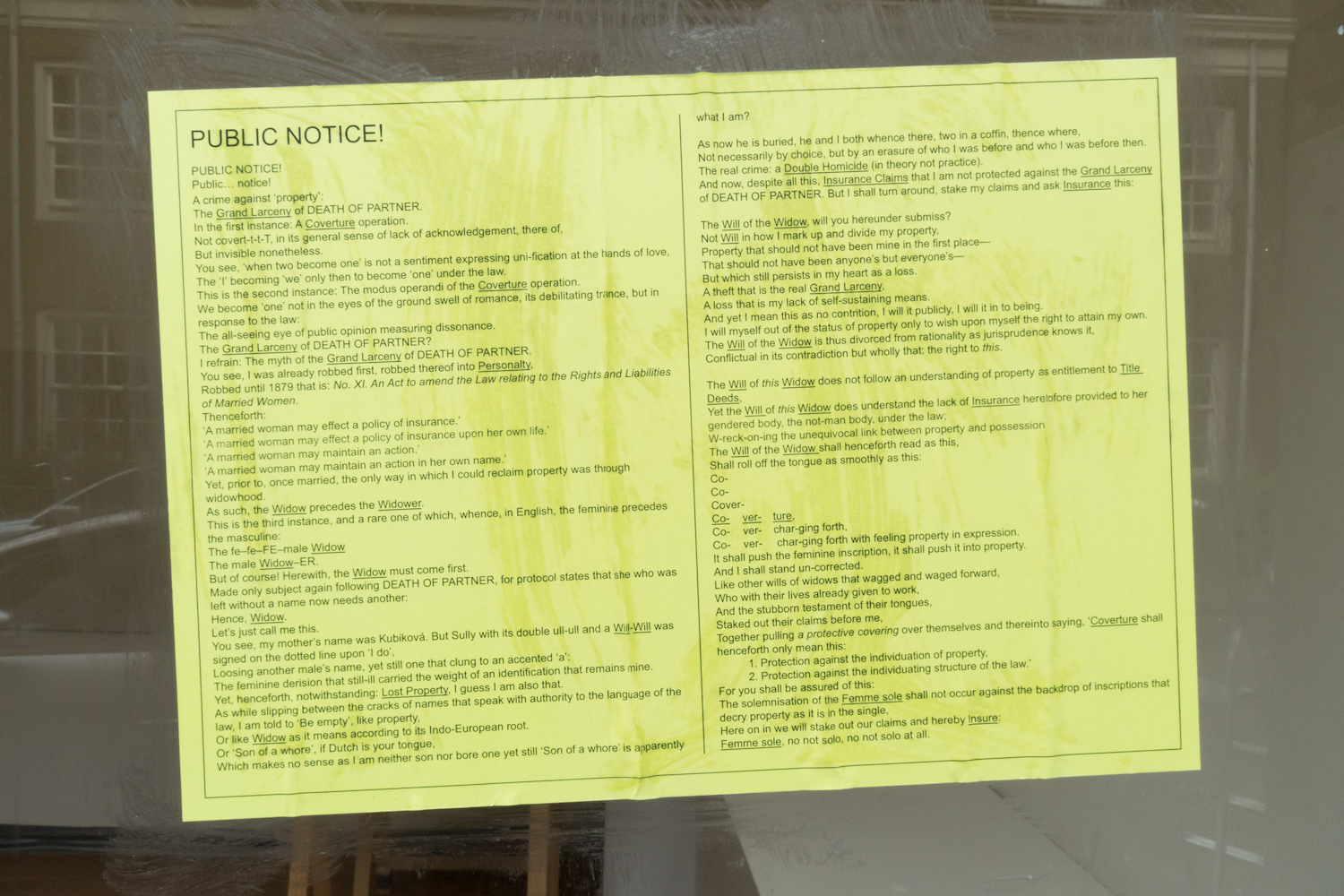
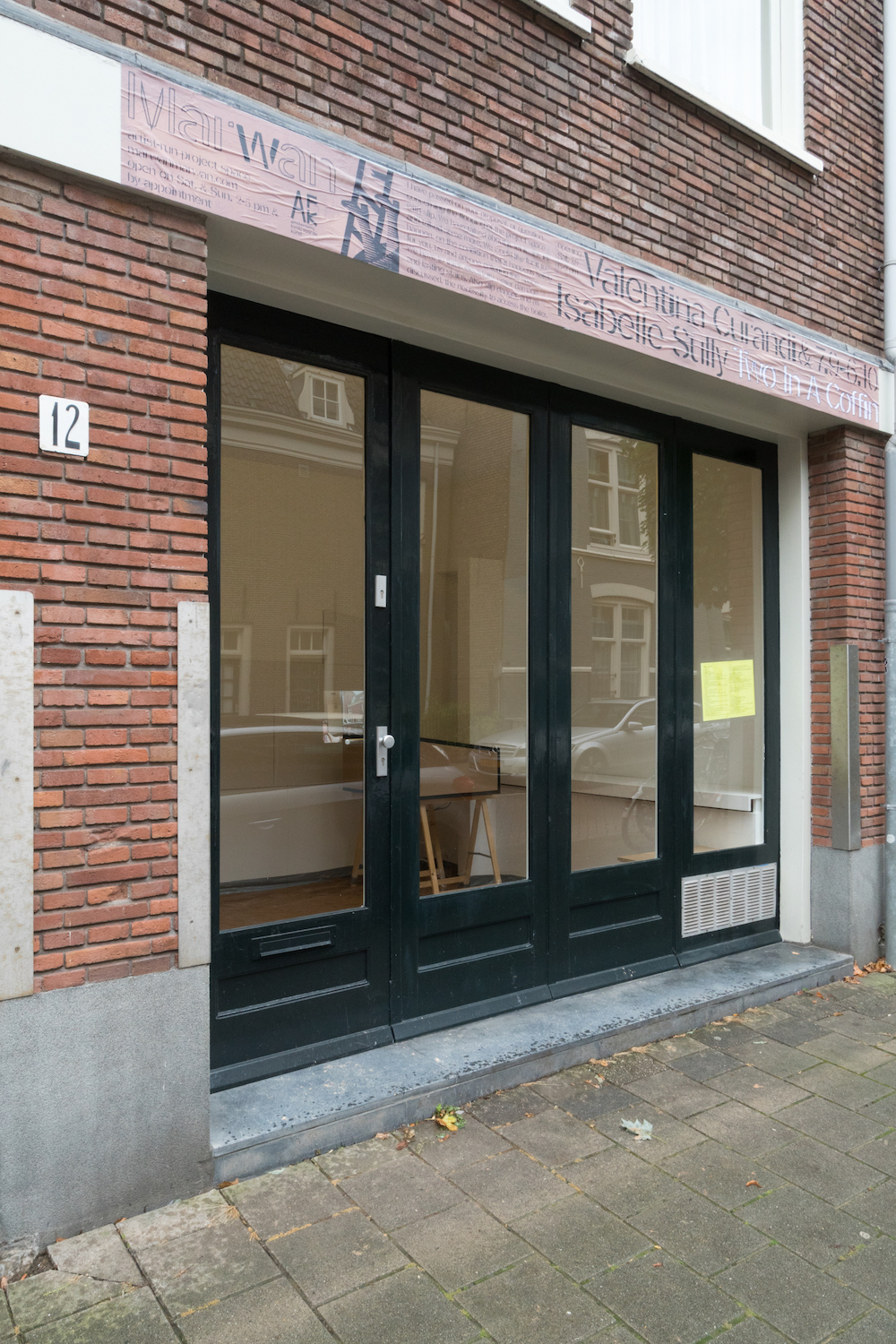
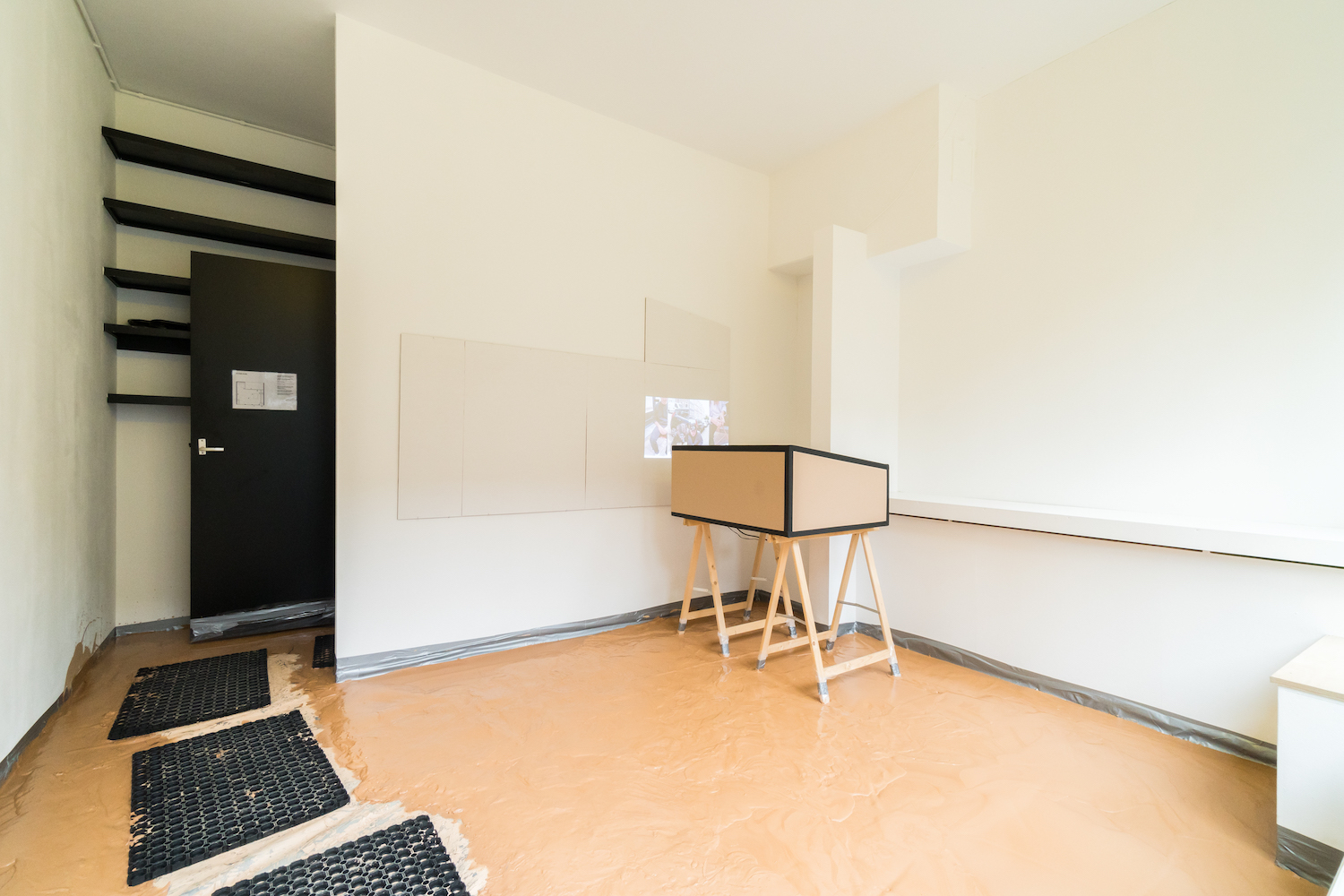

Two in a Coffin
Valentina Curandi & Isabelle Sully
07.09.2019 to 06.10.2019
Drawing its name from the history of the hospitalisation of childbirth—where, when confronted with an exponential increase in the number of deaths during birth and in order to cover up this institutional unpreparedness and negligence, hospitals began burying women in pairs—Two In A Coffin is a two-person exhibition by Valentina Curandi and Isabelle Sully that steams from the artists’ differing approaches to the effects of standardisation on both the gendered body and artistic production. In occupying the confined space of Marwan together, and through scoring a narrative around the administration of life and the management of death, a number of site-specific sound, text and performative works will be presented that concentrate on issues of safety, expression and policy as they relate to the protection of property.
This project was supported by AFK (Amsterdams Fonds voor de Kunst).
Many thanks to Galerie AKINCI, Leon Filter, Yin Yin Wong, Jan Herbst, Adeline van Lier, Kate Olson, Matt Hinkley, Nathaniel Katz, Vincent Knopper, Elki Boerdam, Marek van de Watering, Chun-Han Chiang and Dieuwertje Hehewerth.
Photos by Chun-Han Chiang
courtesy of Marwan and the artists.
Exhibition Text
Review
After the Flood: Artists Fill Amsterdam Gallery with Wet Clay, Establish Safety Fund
John Chiaverina for ARTnews
After the Flood: Artists Fill Amsterdam Gallery with Wet Clay, Establish Safety Fund
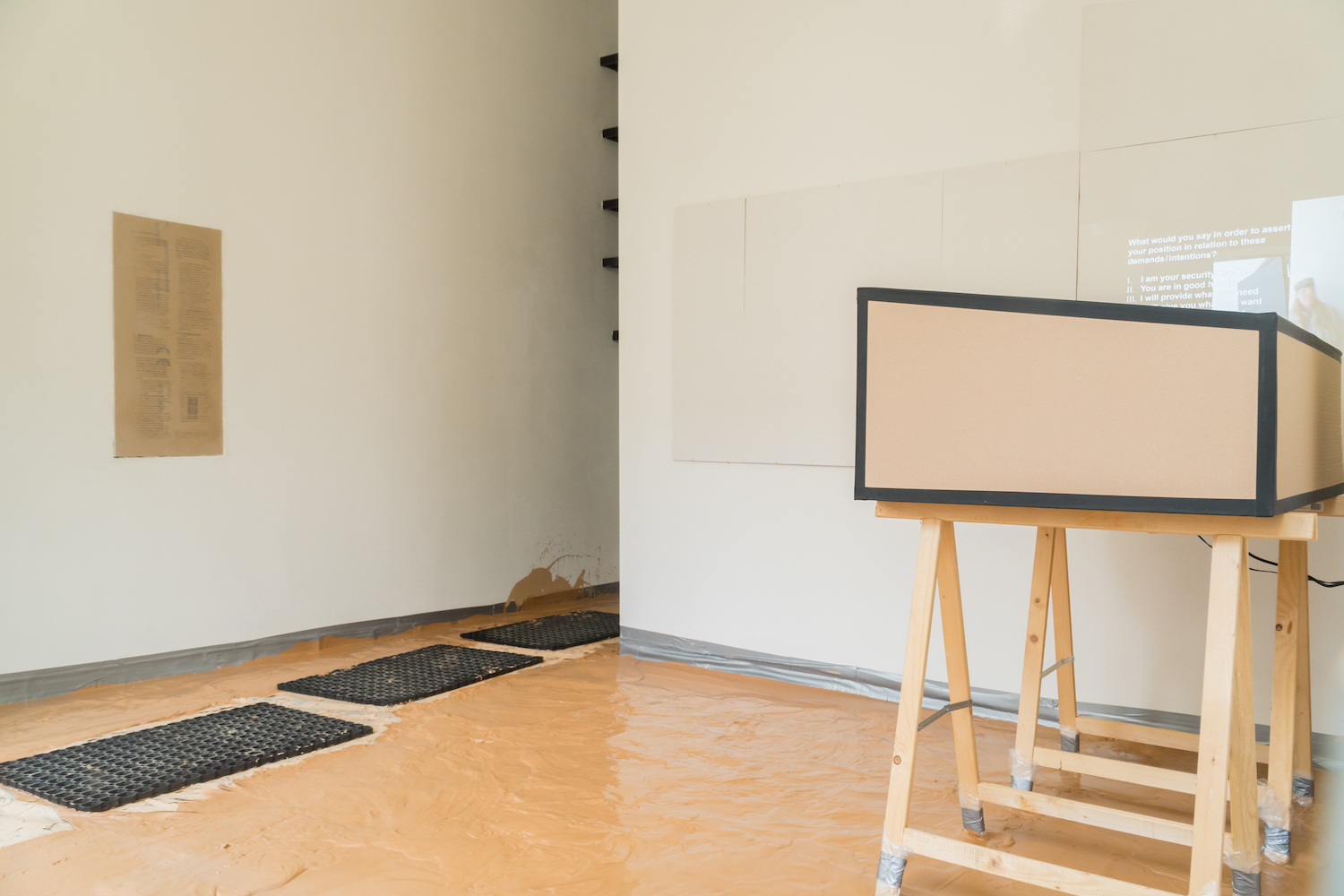
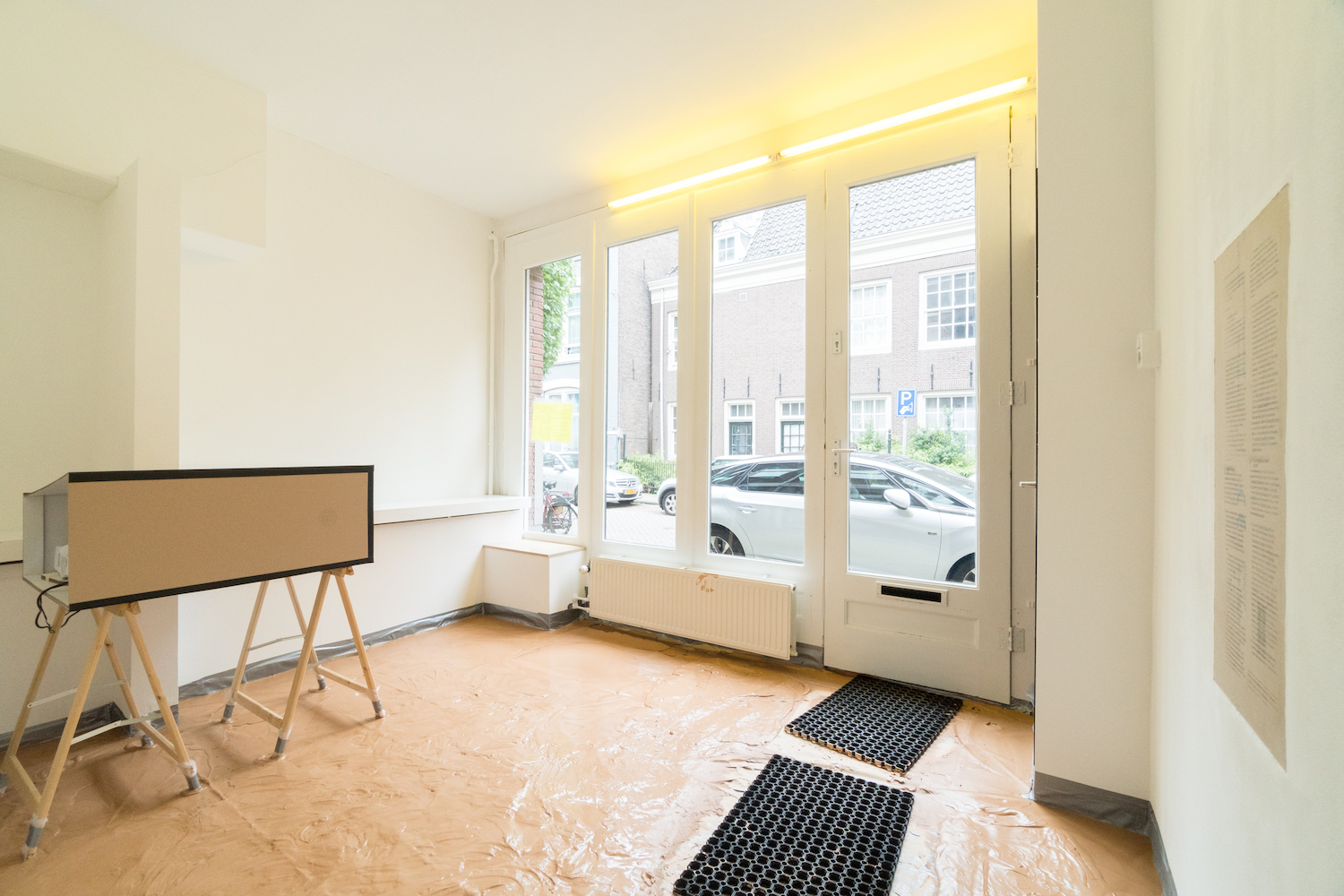
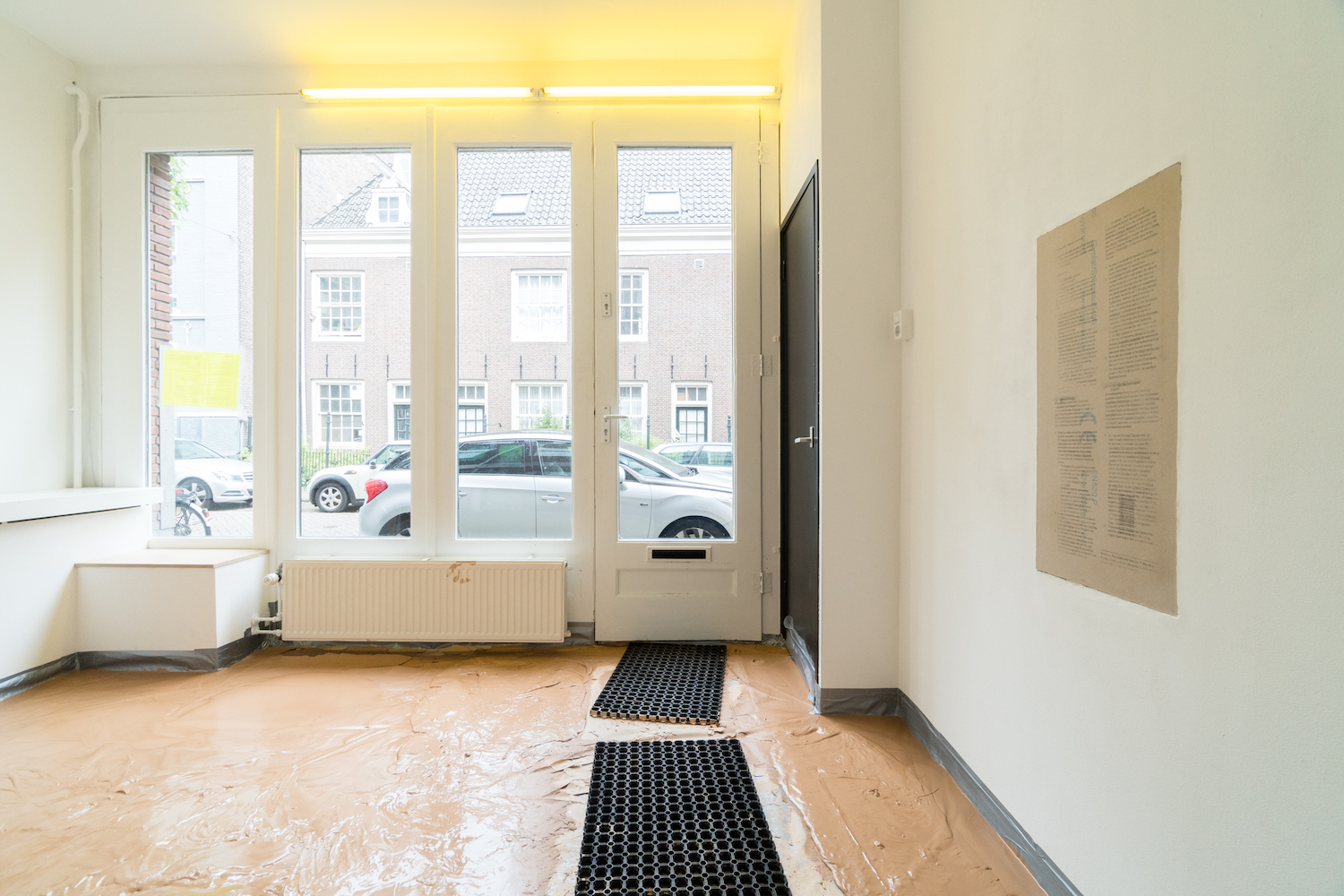
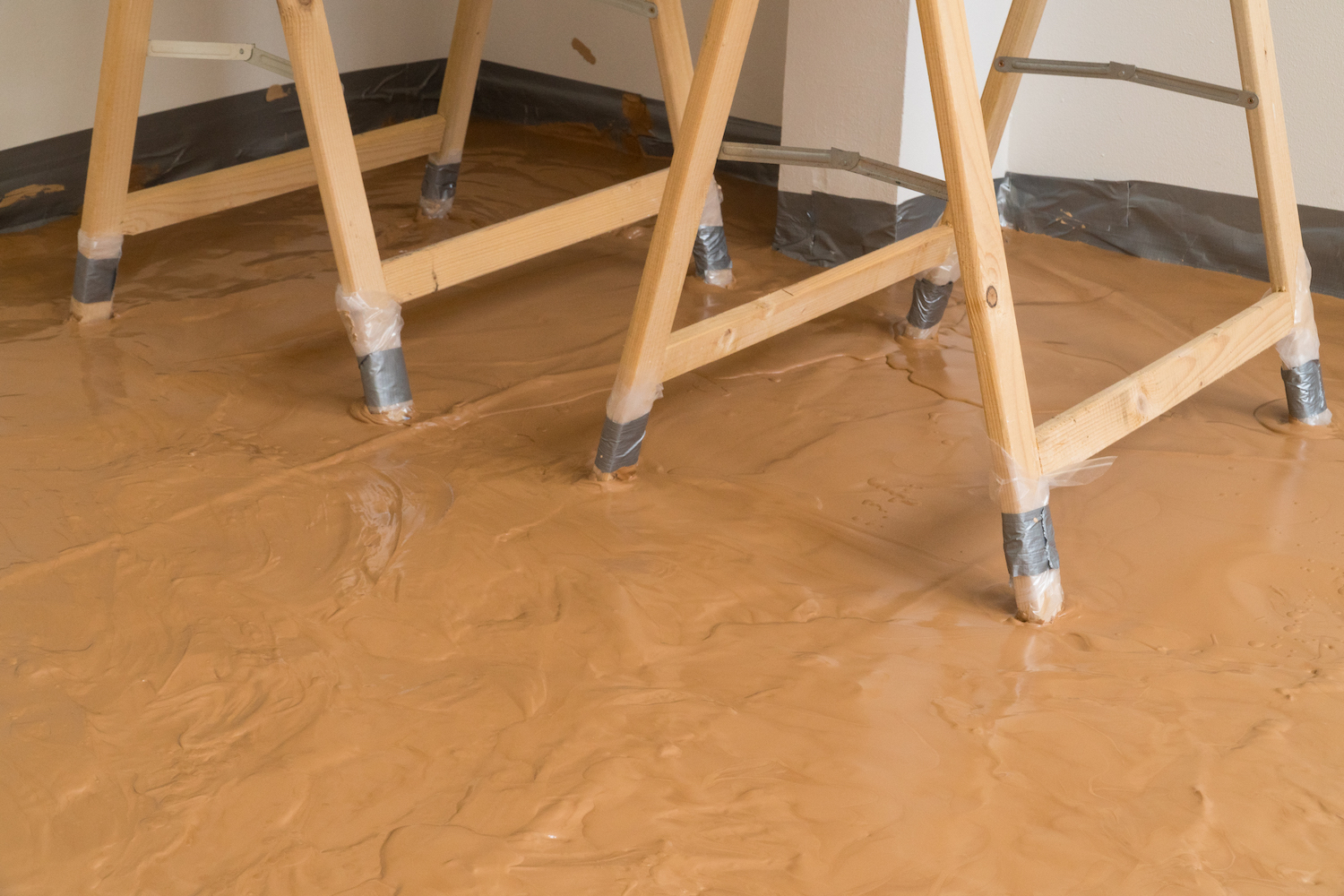
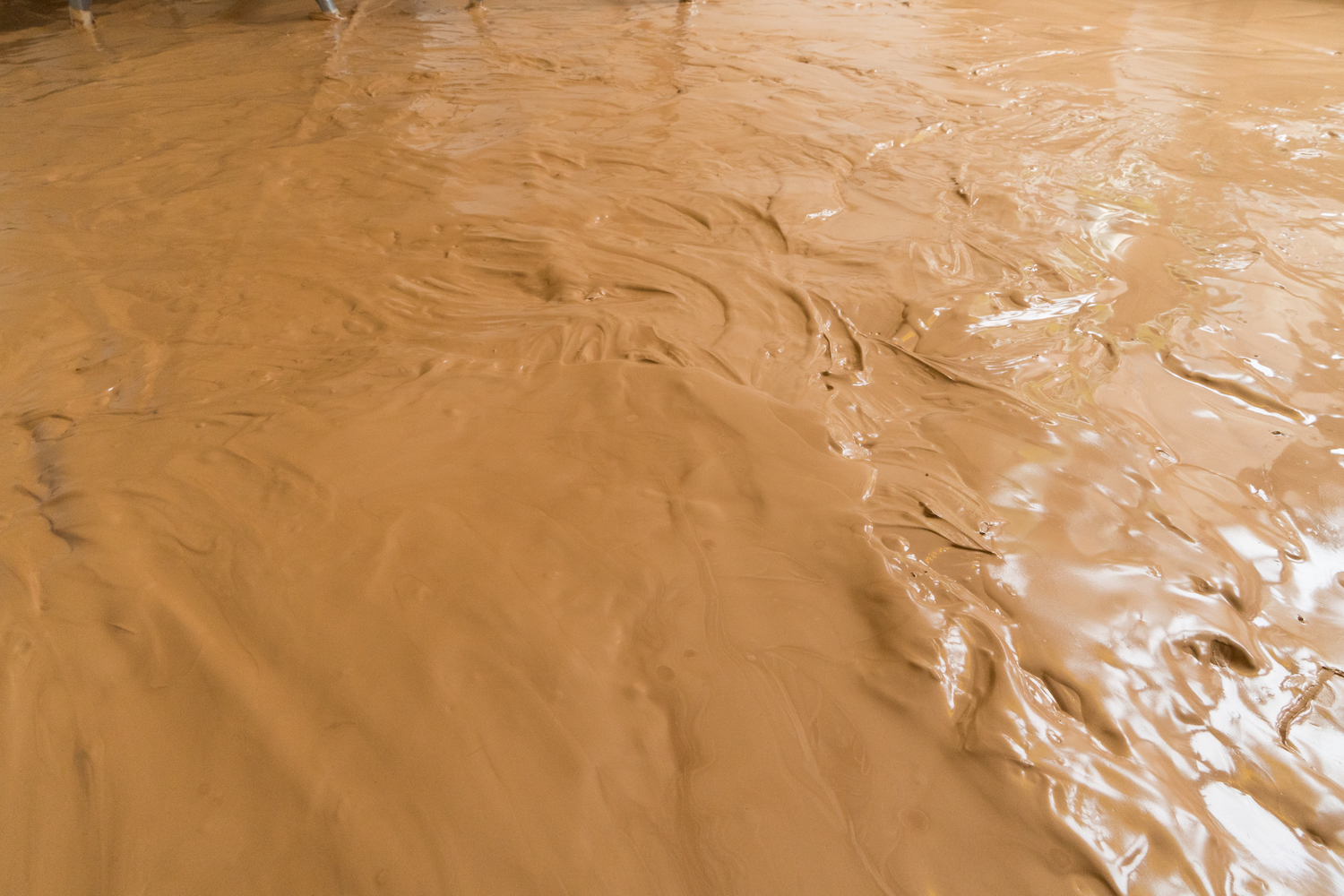
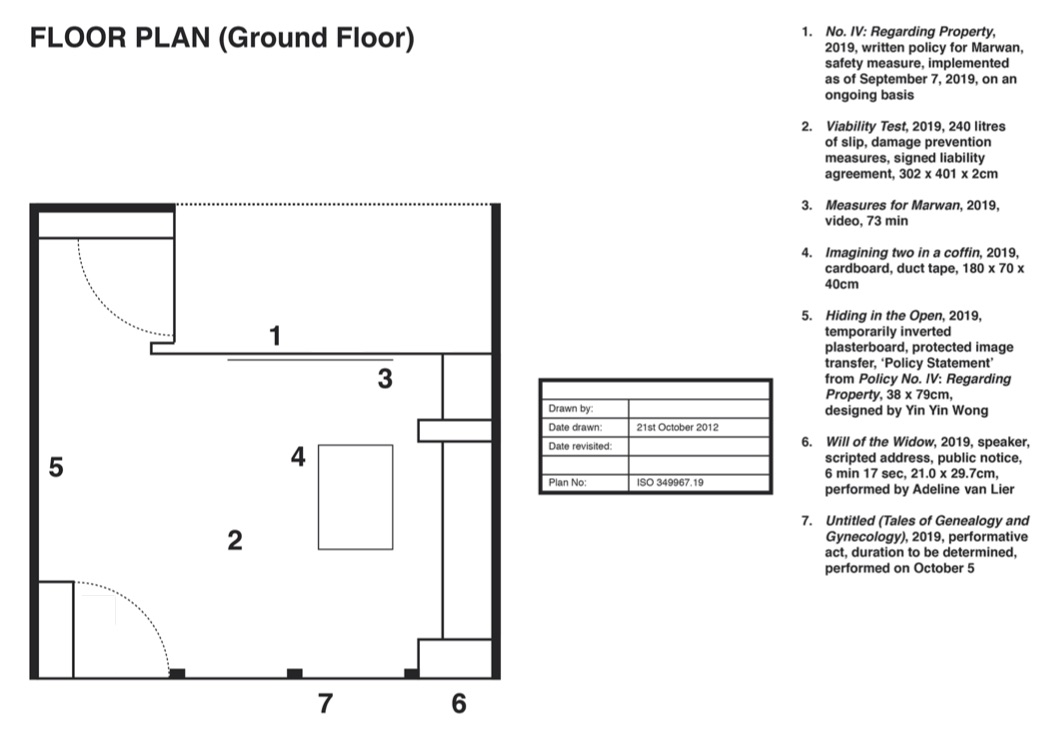
For “Two in a Coffin,” their exhibition at the small Amsterdam project space Marwan, the artists Valentina Curandi and Isabelle Sully decided to flood the gallery. Three days before the opening in early September, the duo carefully undertook a technical process that involved many buckets of silt, filling the space with a mixture of the wet clay about two centimeters deep. That action is just one unusual component of a show that takes a look at matters of policy, gender, and property from a variety of vantage points.
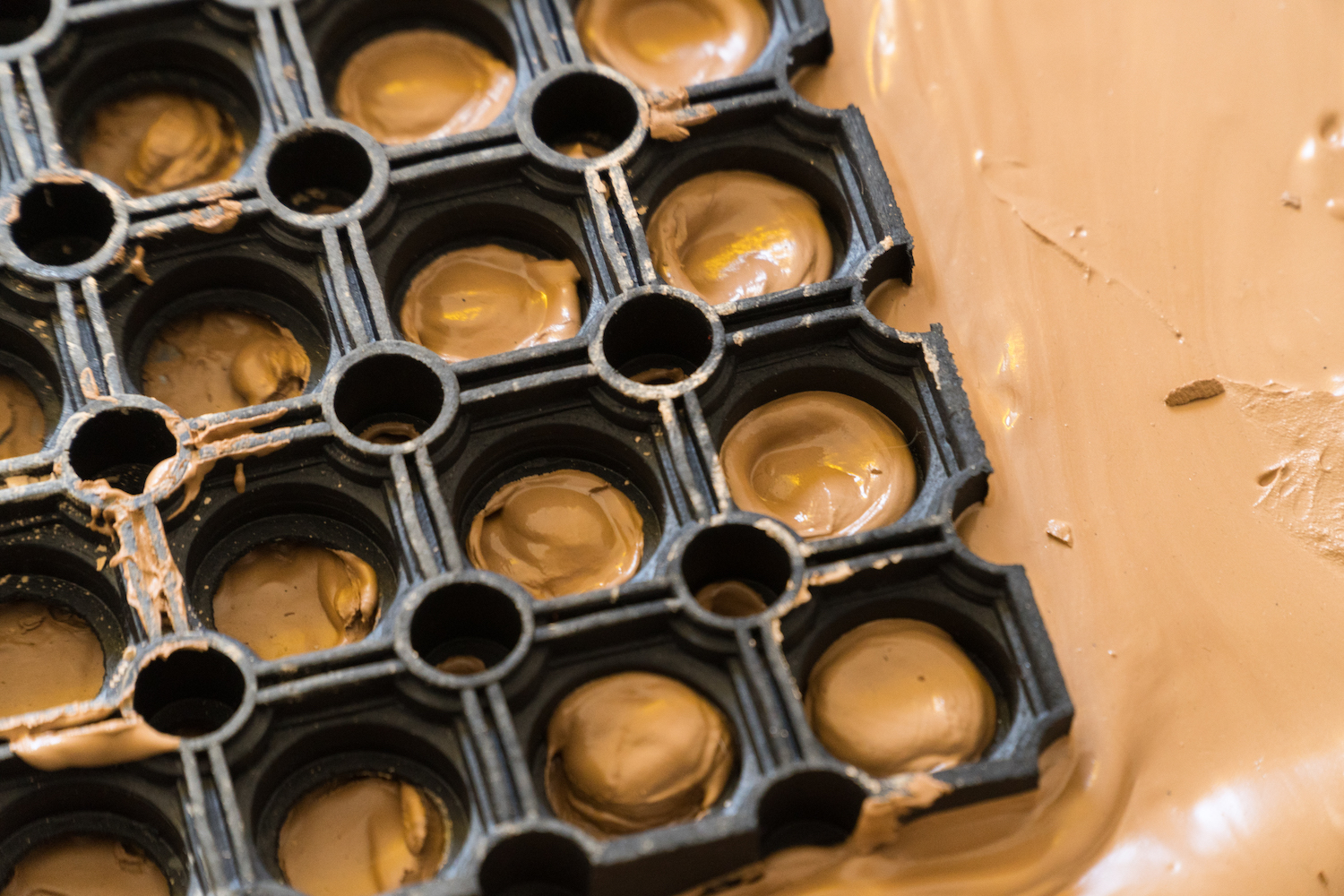
Recently, I spent some time at the space—which is located in a former storage unit connected to the larger, more established gallery AKINCI—with Sully, who is from Australia, lives in Rotterdam, and went to graduate school at the Dutch Art Institute in Arnhem, Netherlands, where she and the Italian-born Curandi first met. Also on hand was Tirza Kater, who directs Marwan along with Tim Mathijsen. It was over a week after the flooding. At the opening, the floor was only partially dried, so the duo installed anti-slip mats and let gallery-goers walk all over it. “It’s funny how people engage,” Sully said to me. “Lots of kids got in it and were really covered in this clay. This line between the border of what an artwork is was totally disregarded by them, which was quite nice. Other people just walked in it and others really see it as this kind of sculptural border.”
The exhibition takes its name from a period in the 19th century following the hospitalization of childbirth, which saw male doctors taking the place of midwives throughout Europe. The doctor’s lack of skill and experience in the field led to an increased death rate—things got so abysmal that women were frequently buried in couples. The show includes a cardboard sculpture that takes the form of a coffin. That piece doubles as a device to play sound from a projected video that documents pre-show negotiations between the artists and the gallerists. All four are wearing Go-Pros on their heads as they hash out details of the exhibition in a way that feels self-aware but also a bit tense. “It was interesting immediately because the first few questions were about safety,” Sully said, of issues she and her partner raised. “Are there safety exits, are there all these other things? Which, it’s a storage space, so of course it doesn’t function in this way.”
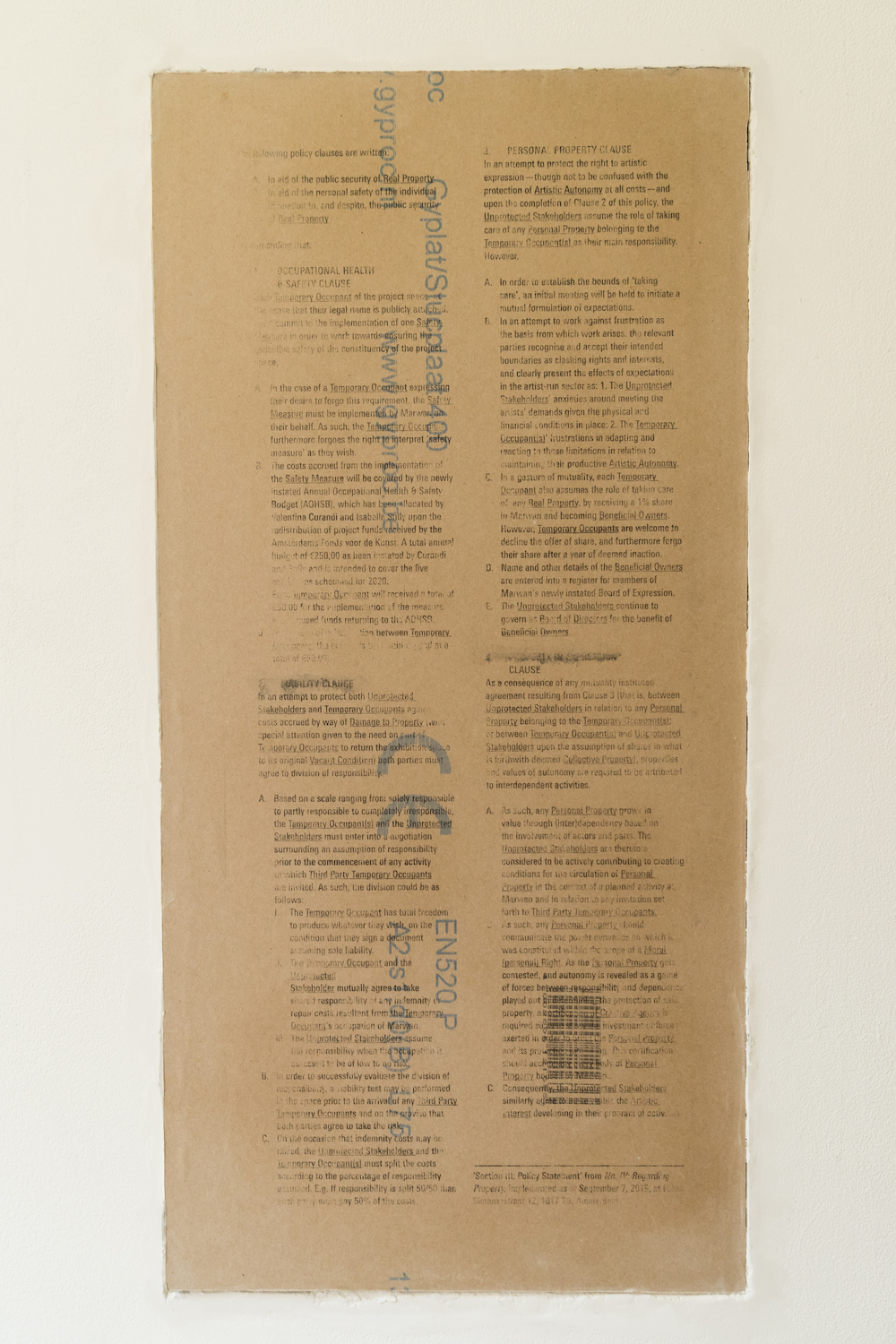
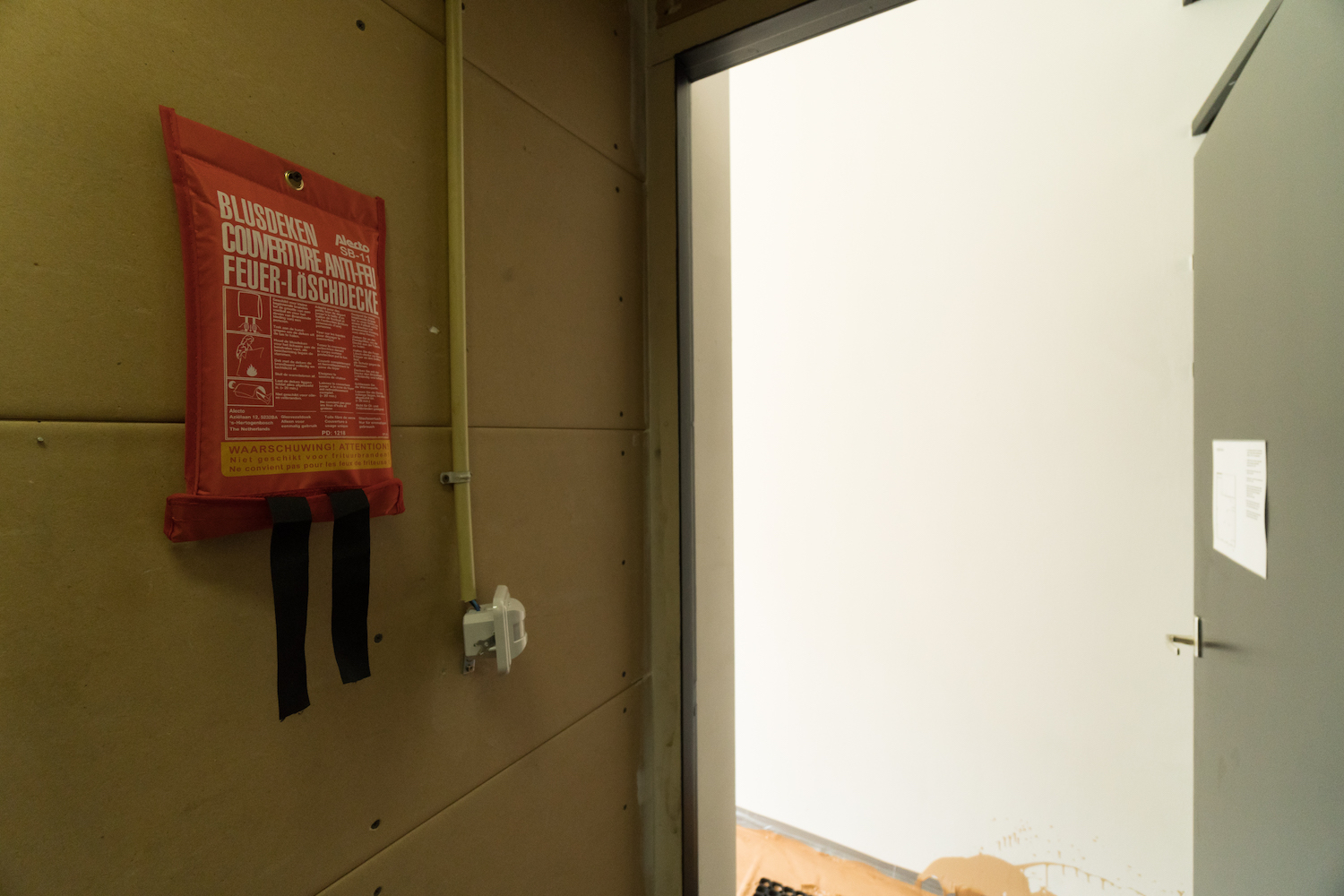
The video led to the creation of a new safety policy that was realized through a grant from the Amsterdam Fund for the Arts. As explained in a wall text, the artists were able to establish a new occupational health and safety fund that provides a stipend for every future exhibiting artist to install one measure of safety for their show. Kater told me that the term “safety” can be interpreted very broadly. Could an artist use it to, say, get a massage? “I hope so. I hope these things happen,” she said.
“This is what I kind of like about this,” Sully chimed in. “You can think of it in an—I don’t know—altruistic sense and think, ‘Oh, I’m going to put a first aid kit in the space for everyone,’ or you can think of it from the perspective of ‘I’m going to feel better at my opening if I have something I feel good in when I wear it.’”
The question of safety within fringe art and culture communities can be fraught. Unlike more regimented institutional venues, project spaces are often run without certain protections. This sense of precariousness is often a vital source of creative energy, but can also be a liability when disaster strikes—the Oakland Ghost Ship fire of 2016, in which 36 people died, is perhaps the most extreme example of an unregulated alternative space’s lack of precautions ultimately ending in tragedy. (It should be emphasized that the Ghost Ship’s exceptionally poor conditions are not emblematic of most alternative art venues). “We can do things that have certain aesthetic or artistic liberties,” Sully said, of small artist-run spaces. “What is this line between safety in expression and safety in physicality?”
Outside of the space, on the street, a hidden sound piece blasts out of a grate. It features a very dramatic Dutch radio actor reading aloud from a script dealing with, among other things, the modern history of property ownership for women. “This whole shelving system is open so [the sound] travels into the storage room and you can hear it quite clearly from there as well,” Sully said. “So it kind of is internalized and swallowed by the building.”
Next to that building is an escape room, which, to those unfamiliar, is an immersive game that is something like a haunted house but with more puzzles. They are often used for corporate team-building exercises. The gallery operators and artists involved in “Two in a Coffin” told me they haven’t visited, but are planning a trip. They noted that the room’s presence can be felt in ways that feel fitting for an art exhibition with “Coffin” in its title. “Often when you’re here you just hear people scream a few times a day,” Sully said.